
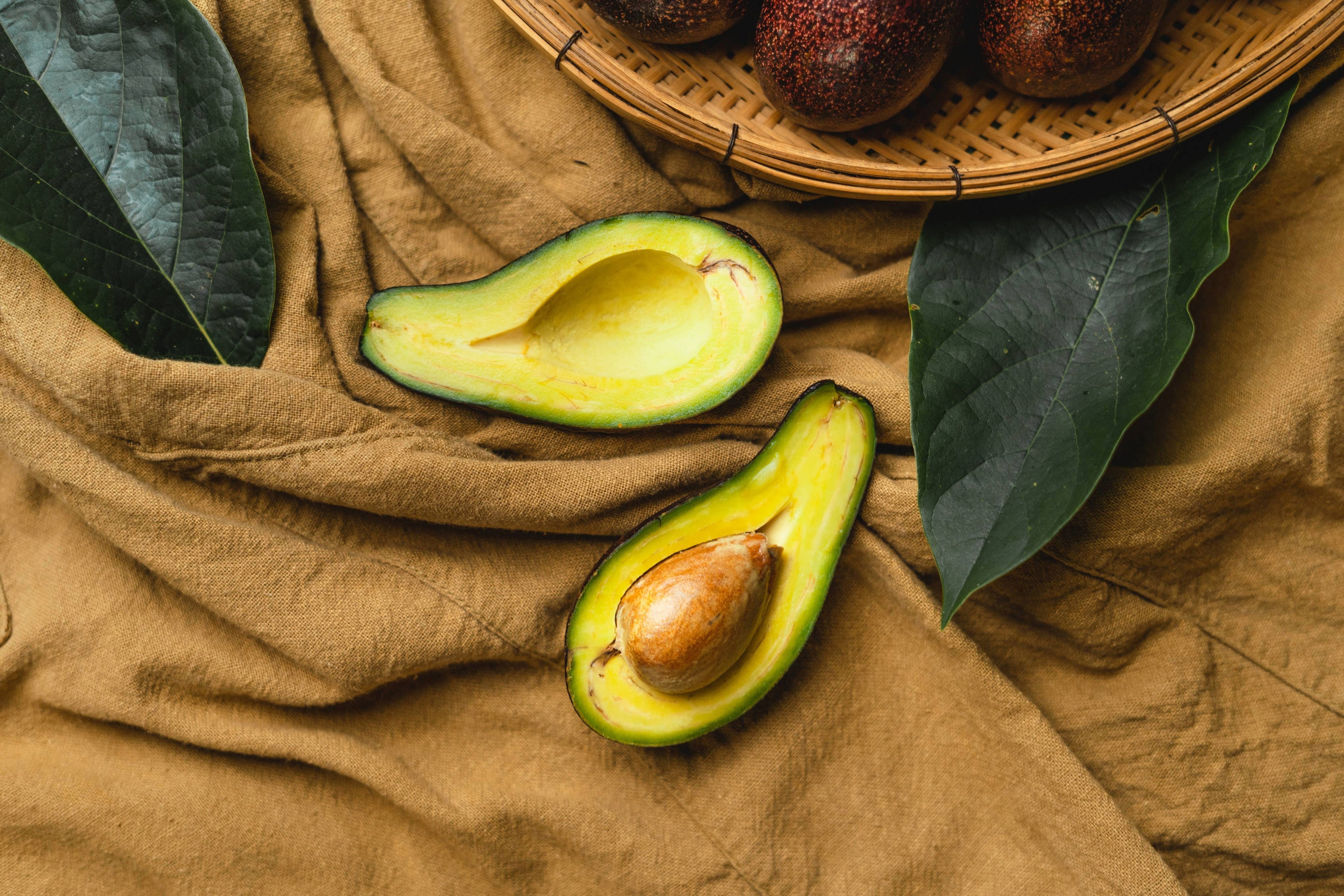
The Quiet Ingredient in Every Jar: Why Avocado Oil Deserves Your Attention
There is an ingredient in every jar of Elysian Luxe that most people walk straight past on the label. It is not the one with the heritage story. It is not the one everyone recognises. It sits quietly in third place on the INCI list, doing its work without fanfare — and it is one of the reasons the formula feels the way it does on skin.
Avocado oil - and it is worth knowing about.
What makes avocado oil different
Not all plant oils behave the same way on skin. Some sit on the surface, forming a light barrier. Others — and avocado oil is firmly in this category — penetrate deeply into the skin's layers, carrying their nutrients with them rather than leaving them at the door.
This is largely down to its fatty acid profile. Avocado oil is exceptionally rich in oleic acid, an omega-9 monounsaturated fatty acid that makes up between 60 and 80 percent of its composition. Oleic acid is significant because it closely mirrors the fatty acids already present in healthy skin — meaning the skin recognises it, absorbs it readily, and responds to it well. Clinical research has found that topical use of oils high in oleic acid improved the skin barrier and increased hydration levels in participants with dry, compromised skin, with measurable improvements in the skin's flexibility and moisture content. PubMed Central
For families dealing with dry, sensitive, or reactive skin — particularly in colder months or in heated indoor environments — this penetrating quality is genuinely valuable. A surface-level barrier is useful. Nourishment that reaches deeper layers of the skin does more.
A profile built for real skin needs
Beyond oleic acid, avocado oil brings a broad spectrum of fat-soluble vitamins that few single ingredients can match. Avocado oil contains vitamins A, B1, B2, B5, C, D, E and K — a comprehensive nutrient profile that supports the skin in multiple ways simultaneously. King's College London
Vitamin E, present in particularly high concentrations, is one of the skin's most important antioxidants — neutralising the free radical damage caused by sun exposure, pollution, and environmental stress. Avocado oil contains 130 to 200mg per kg of tocopherols — vitamin E and vitamin C — which can reverse ongoing DNA damage in skin. Vitamin A supports cellular renewal. Vitamin D contributes to skin cell growth and repair. King's College London
Avocado oil also contains components similar to the composition of skin itself — including lecithin, squalane, and skin-loving fatty acids — which is why it is particularly effective at maintaining the skin's barrier function. King's College London
And there is more: the essential fatty acids and oleic acid in avocado oil can promote collagen synthesis, a process that creates new connective tissue. Research published in the Journal of Cosmetic Dermatology indicates that certain bioactive compounds in avocado oil, including phytosterols, may help soothe minor inflammation — beneficial for individuals with eczema, psoriasis, or other forms of irritated skin. Oxford University Research ArchiveAnnals of Allergy, Asthma & Immunology
For families managing dry patches, seasonal sensitivity, or skin that simply needs consistent, deep nourishment, this is a meaningful profile.
Avocado and Africa
Avocado originated in Mesoamerica — its roots lie in Mexico and Central America, where it has been cultivated for thousands of years. It arrived in Africa through European trade routes in the 16th century, and over time became widely grown across the continent, including in Ghana and other parts of West Africa where the climate suits it well.
It is now a familiar presence across African households — used in food, in hair care, and increasingly in skincare. Its properties fit naturally within the broader tradition of plant-based, ingredient-led care that West African communities have practised for generations: the understanding that what grows from the earth, used wisely and consistently, can sustain and protect the body. Shea, avocado, coconut, jojoba — each chosen not for trend but for what they do.
That is the tradition Elysian Luxe is built on. Every ingredient earns its place.
Why it works alongside shea
Avocado oil is not a trace ingredient in Elysian Luxe — it is there in meaningful measure, playing a specific and purposeful role alongside shea butter. Where shea provides the rich, occlusive weight that seals and protects, avocado oil brings its penetrating, vitamin-dense nourishment deeper into the skin. They work together rather than duplicating each other — shea forming the protective outer layer, avocado reinforcing the skin from within.
The result is a formula that does not just sit on top of skin. It works with it.
Who it is particularly good for
Avocado oil's combination of deep penetration, anti-inflammatory properties, and vitamin richness makes it especially well suited to:
Dry or mature skin that needs more than surface hydration. Sensitive skin prone to inflammation or reactivity. Skin recovering from environmental exposure — sun, wind, cold. Children's skin, which tends to be more permeable and responsive to nutrient-rich oils. Hair that is dry, brittle, or in need of moisture — avocado oil is one of the most effective natural hair oils, penetrating the hair shaft rather than simply coating it.
Next time you apply Elysian Luxe, it is the ingredient doing the quiet, deep work you might not notice — until you stop using it.
Pure. Proven. Personal.
Explore Elysian Luxe Nourishing Body Butter
We believe in the power of nature, but we are not medical professionals. Always consult with a GP or dermatologist for persistent skin concerns.
References:
- Dreher, M.L. & Davenport, A.J. (2013). Hass Avocado Composition and Potential Health Effects. Critical Reviews in Food Science and Nutrition, 53(7), 738–750. https://doi.org/10.1080/10408398.2011.556759
- Vaughn, A.R., Clark, A.K., Sivamani, R.K., & Shi, V.Y. (2018). Natural oils for skin-barrier repair: Ancient compounds now backed by modern science. American Journal of Clinical Dermatology, 19(1), 103–117.
- Lin, T.K., Zhong, L., & Santiago, J.L. (2018). Anti-inflammatory and skin barrier repair effects of topical application of some plant oils. International Journal of Molecular Sciences, 19(1), 70. https://doi.org/10.3390/ijms19010070