The Moisturiser Mistake Almost Every Family Makes (And How to Fix It)
Here is something most families do every single day without realising it is working against them. They shower, dry off completely, go about their morning, and then reach for the moisturiser twenty minutes later when their skin starts to feel tight. Or they apply it before bed, hours after bathing, to skin that has already lost the moisture the bath put back in.
It feels like a reasonable thing to do. It is, unfortunately, the least effective way to moisturise — and once you understand why, you cannot unsee it.
What is actually happening when you moisturise
To understand the mistake, it helps to understand what moisturiser is actually trying to do.
Your skin has a protective outer layer called the stratum corneum — the part you can see and touch. This layer naturally loses water to the air all day long, a process called transepidermal water loss, or TEWL. A healthy, intact skin barrier slows this loss down significantly. But when the barrier is compromised — through dryness, eczema, harsh products, or simply the wear and tear of daily life — water escapes faster than the skin can replace it. The result is that familiar tight, rough, uncomfortable feeling.
The job of a moisturiser is not to add water to your skin. It is to seal in the water that is already there.
This is an important distinction. Most moisturisers work through a combination of occlusive ingredients (which form a protective film on the skin surface, slowing water loss) and emollient ingredients (which soften and smooth by filling the gaps between skin cells). Neither of these mechanisms adds water. They lock in what is already present.
Which means if your skin is already dry when you apply your moisturiser, there is very little left to lock in.
The three-minute window
Dermatologists refer to it as the "soak and seal" method, and the principle is endorsed by the American Academy of Dermatology and widely cited in clinical guidance for dry and eczema-prone skin. The idea is straightforward: bathe or shower in lukewarm water, gently pat the skin until it is damp but not dripping, and apply your moisturiser within three minutes.
Why three minutes? Because after bathing, your stratum corneum is saturated with water — and that water begins evaporating immediately. Research shows that transepidermal water loss peaks in the first few minutes after bathing and can remain elevated for up to an hour if no barrier is applied. The three-minute window is when the skin is at its most receptive, and when sealing it in makes the greatest difference. Wait longer than that, and you are applying your moisturiser to skin that has already begun to dry out. The opportunity has passed.
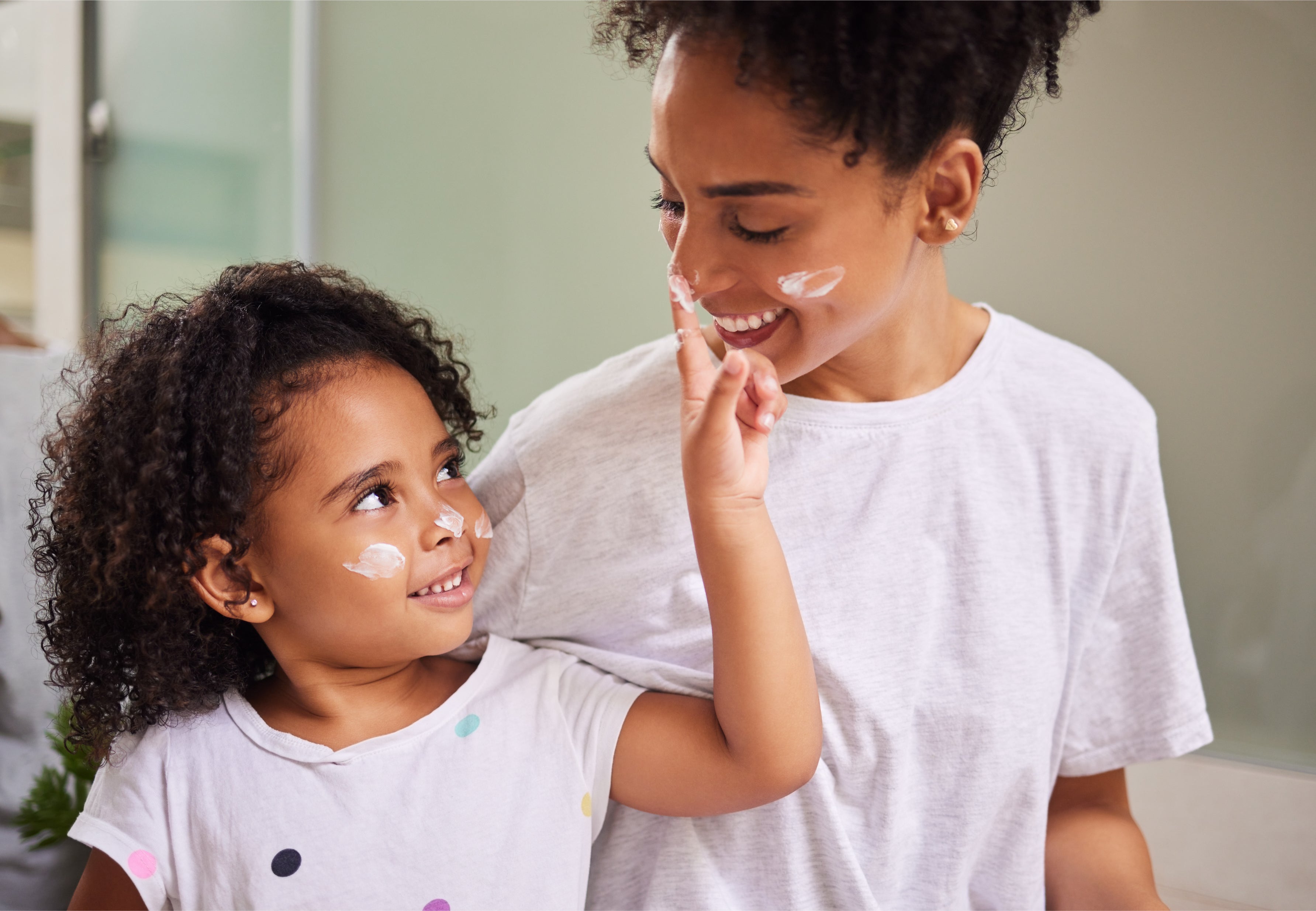
For children and babies — whose skin barriers are still developing and more prone to moisture loss — this timing matters even more.
The other mistakes worth knowing about
Timing is the biggest one, but it is not the only thing that affects how well a moisturiser works.
Hot water strips before the moisturiser can seal. Very hot showers feel good, but they remove the skin's natural oils, leaving the barrier even more vulnerable. Lukewarm water — warm enough to be comfortable, but not steaming — is the sweet spot. Keep bathing to ten to fifteen minutes.
Rubbing dry undoes the work of bathing. Vigorous towel drying causes friction that can irritate already-sensitive skin and accelerates water evaporation. Patting gently, leaving a slight sheen of dampness, is the preparation your skin actually needs.
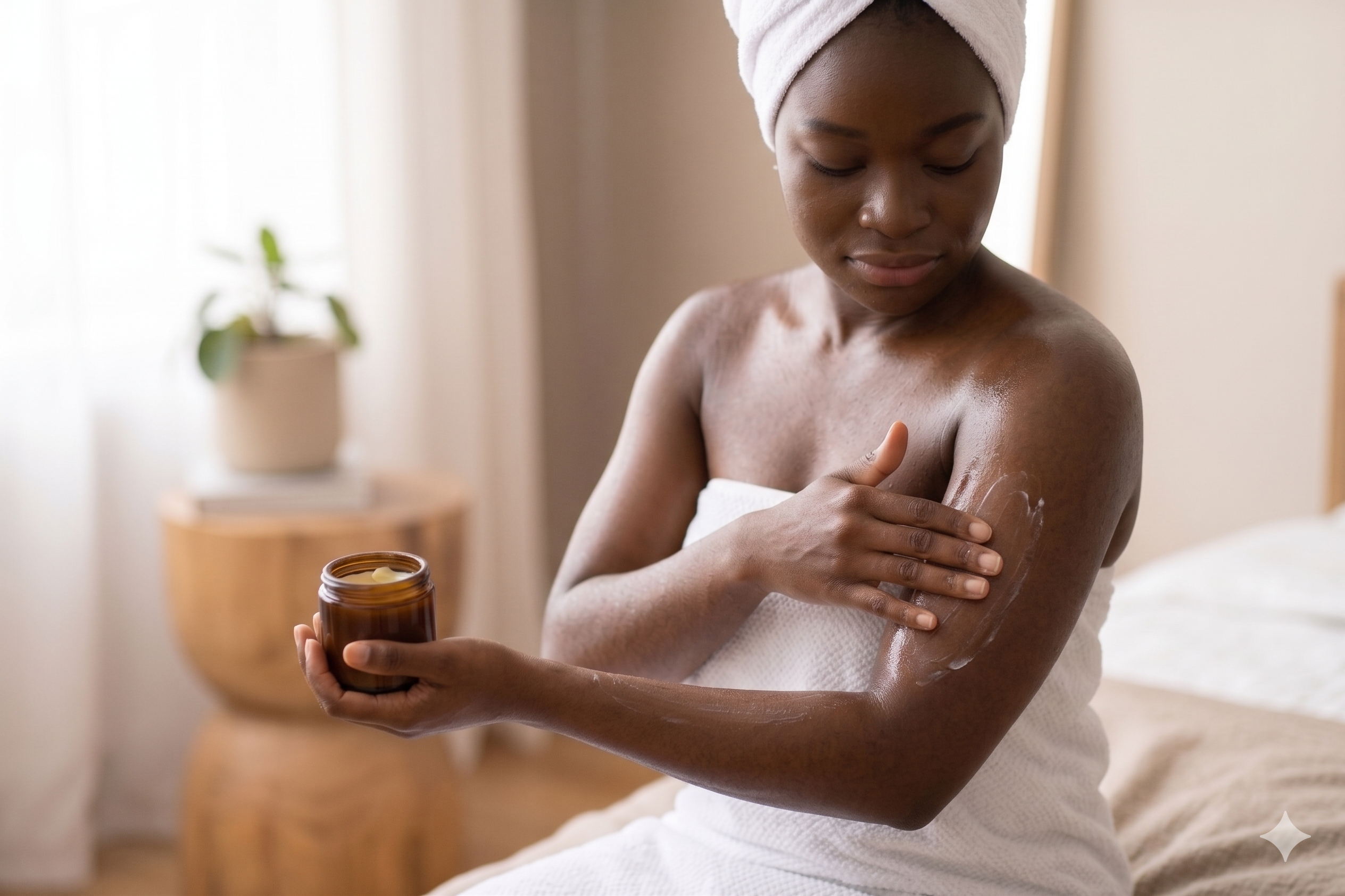
Applying too little means too little protection. A moisturiser cannot seal what it does not cover. For the body, a generous application — properly warmed between the palms first — is far more effective than a light pass. A little more than you think you need, applied while the skin is still damp, goes a long way.
Skipping on "good skin days" breaks the habit. Consistent daily moisturising — not just when skin feels dry — is what builds and maintains a healthy barrier over time. The skin you moisturise today is less likely to be the dry, reactive skin of next week.
What this looks like in practice for a family
For babies, the approach is simple: after every bath, pat dry with a soft towel, leave the skin slightly damp, and apply straight away. The same principle applies from toddlers to adults. Warming a small amount of our Elysian Luxe Body Butter between your palms and pressing it gently into damp skin — rather than rubbing it in harshly — allows the oils to do their work: forming that protective, softening seal while the skin still has moisture worth protecting.
The anhydrous formulation of the Elysian Luxe Body butter — meaning it contains no water — makes it particularly well suited to this approach. There is no water in the formula that would dilute its effect, and no preservatives required to stabilise one. What you are applying is concentrated, purposeful nourishment that works with your skin's biology, not around it.
One small change in timing. Significant difference in results.
Pure. Proven. Personal.
Explore Elysian Luxe Nourishing Body Butter
We believe in the power of nature, but we are not medical professionals. Always consult with a GP or dermatologist for persistent skin concerns.
References:
- American Academy of Dermatology Association. Dermatologists' top tips for relieving dry skin. aad.org. Accessed April 2026. https://www.aad.org/public/everyday-care/skin-care-basics/dry/dermatologists-tips-relieve-dry-skin
- Alexander, H., Brown, S., Danby, S., & Flohr, C. (2018). Research techniques made simple: Transepidermal water loss measurement as a research tool. Journal of Investigative Dermatology, 138(11), 2295–2300. https://doi.org/10.1016/j.jid.2018.09.001
- Healthline / Strachan, D. (2021). Why applying products to damp skin may be the key to your healthiest skin yet. Healthline. https://www.healthline.com/health/beauty-skin-care/damp-skin