One in Five Children Has Eczema. Here's What Every UK Family Should Know About Skincare
When a child's skin flares — red, rough, relentlessly itchy — the instinct is to reach for anything that might help. Parents often spend months, sometimes years, cycling through products that promise relief and deliver frustration.
What is rarely discussed in that cycle is the underlying science: why does some skin break down so easily, and what does a well-functioning skin barrier actually need?
This post is not a treatment guide. It is an education piece — about the skin's natural architecture, why barrier health matters for every family member, and the ingredients that have supported skin across generations.
Understanding the skin barrier
The outermost layer of the skin — the stratum corneum — acts as the body's first line of defence. Think of it as a brick wall: skin cells are the bricks, and a mixture of lipids (fats, oils, and ceramides) is the mortar that holds everything together.
When that mortar is intact, skin stays hydrated and resilient. Irritants, allergens, and environmental stressors are kept out. When it breaks down — due to genetics, environment, harsh products, or simply cold, dry air — skin becomes vulnerable. Moisture escapes. Sensitivity increases. The barrier takes time to repair itself.
In conditions like atopic dermatitis (commonly known as eczema), this breakdown is a defining feature. The British Association of Dermatologists estimates that eczema affects around one in five children in the UK, and significant numbers of adults too. Managing it — and supporting barrier function more broadly — is something millions of families navigate every day.
For families dealing with persistent or severe symptoms, a GP or dermatologist is always the first call. What we are exploring here is the underlying science that informs good daily skin care — not a replacement for medical care.
Why lipid-rich ingredients matter
Research into skin barrier function consistently points to the role of lipids — fats, oils, and plant butters — in supporting the skin's outer layer. Emollients (ingredients that soften and smooth) and occlusives (ingredients that seal moisture in) form the backbone of almost every evidence-based skin care recommendation.
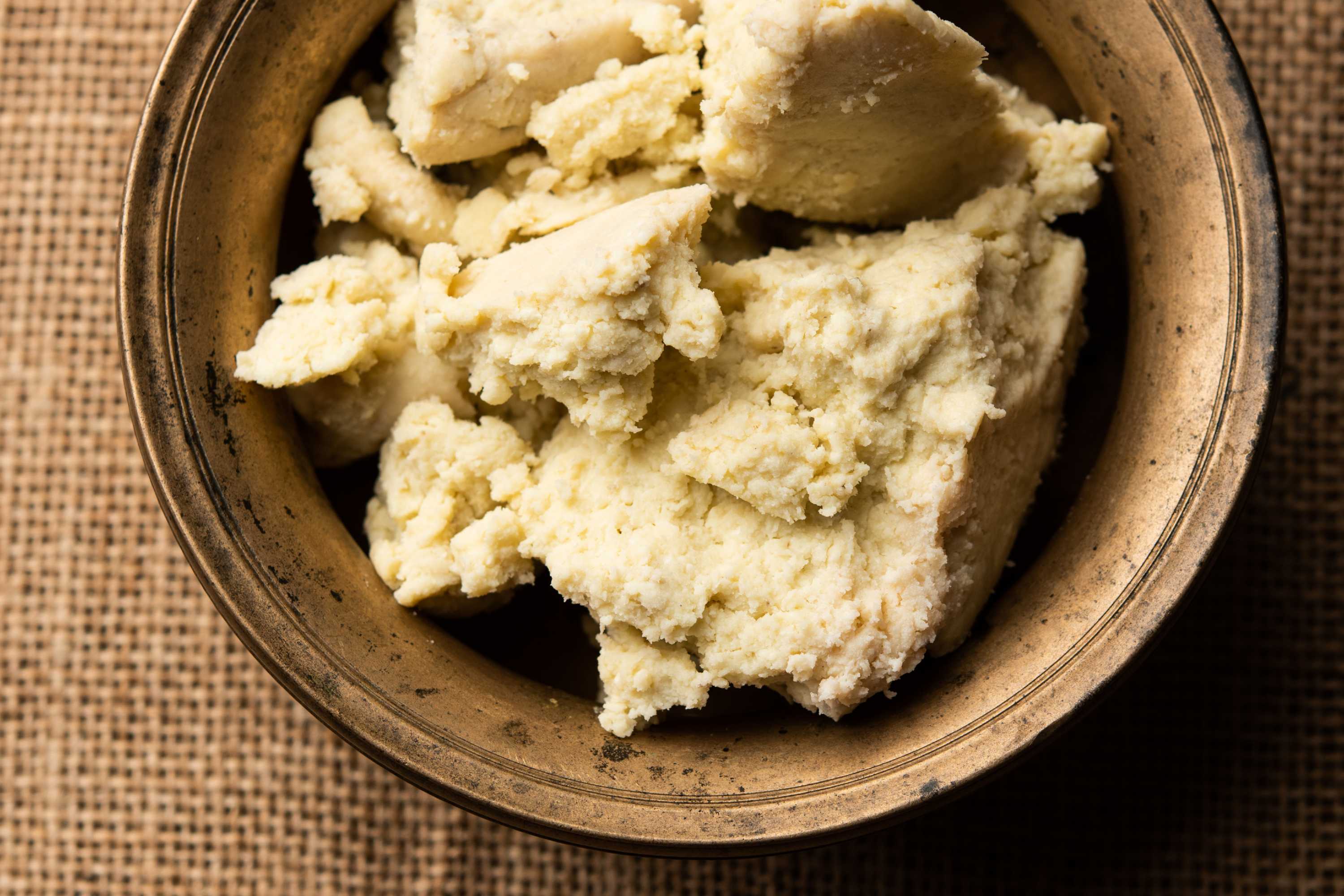
Shea butter has been studied in this context. Research published in the Journal of Oleo Science has examined its fatty acid composition and emollient properties. Its high concentration of oleic and stearic acids makes it a subject of genuine scientific interest, not just traditional use.
Oils like jojoba, avocado, and coconut have also appeared in skin barrier and emollient research. Jojoba in particular is unusual — technically a liquid wax, its structure closely resembles the skin's own sebum, which has attracted attention from researchers looking at how topical oils interact with the barrier layer.
None of this is a claim that any ingredient treats or prevents eczema. It is context: a reason why plant-based, lipid-rich formulations have been used across cultures for generations, and why the science behind them is worth understanding.
Heritage and knowledge, passed down
In West African traditions, shea butter has been a daily skin care staple for centuries — used across Ghana, Nigeria, Senegal, and beyond for everything from protecting skin in dry harmattan season to soothing newborn skin after bathing. This was not incidental. It was generational knowledge: an understanding, refined over time, that certain plants and fats kept skin healthy and comfortable.
That knowledge did not come with clinical trials. It came with observation, experience, and care passed from one generation to the next.
Modern research has largely confirmed what those traditions intuited. Ingredients used for centuries in West African households are now studied in dermatology journals. The two bodies of knowledge are not in conflict — they are, in many ways, the same knowledge, expressed differently.
At Lunask, our formulations are rooted in that heritage. Not as a marketing story, but as the genuine origin of what we do.
What this means for your family's daily skin care
There is no single solution for every family's skin — and anyone who says otherwise is overpromising.
What the evidence does support is this: consistent, gentle, lipid-rich care tends to support skin barrier function better than products that strip or disrupt it. Fewer ingredients. No unnecessary fragrances in daily-use products. A focus on nourishment rather than correction.
Some practical principles worth knowing:
Check the ingredient order. Ingredients are listed by concentration, highest first. If water is the first ingredient and a beneficial oil appears near the bottom, there is not much of it in the product.
Anhydrous (waterless) formulations — those without water in the formula — do not require the same preservative systems as water-based products and tend to have simpler ingredient lists. They are not inherently superior, but the distinction is worth understanding when choosing products for family use.
Less is often more. For skin that is sensitive or easily disrupted, a shorter ingredient list reduces the number of potential irritants. This does not mean expensive — it means intentional.
Patch test. For any new product, a patch test on a small area of skin for 24-48 hours is good practice — particularly for anyone with a history of sensitivity.
A note on seeking support
If you or anyone in your family is managing a diagnosed skin condition, the advice here is not a substitute for professional guidance. A GP can refer to dermatology, and a dermatologist can assess whether prescription emollients or other treatments are appropriate.
The British Association of Dermatologists (bad.org.uk) and the National Eczema Society (eczema.org) both offer well-evidenced resources for families navigating eczema — both are worth bookmarking.
Good skin care is not complicated — but it does take intention.
Understanding your skin's barrier, knowing which ingredients support it, and choosing products rooted in both heritage and sound science: that is the standard we hold ourselves to at Lunask.
Pure. Proven. Personal.
This article is for informational purposes only and does not constitute medical advice. Always consult a GP or dermatologist for persistent skin concerns. Lunask does not claim that Elysian Luxe™ Nourishing Body Butter treats, prevents, or is specifically formulated for any skin condition.
References
- British Association of Dermatologists. Atopic Eczema. bad.org.uk — https://bad.org.uk/pils/atopic-eczema
- National Eczema Society. Understanding Eczema. eczema.org — https://eczema.org/information-and-advice/
- Lin, T-K., Zhong, L., & Santiago, J.L. (2018). Anti-Inflammatory and Skin Barrier Repair Effects of Topical Application of Some Plant Oils. International Journal of Molecular Sciences, 19(1), 70. https://doi.org/10.3390/ijms19010070