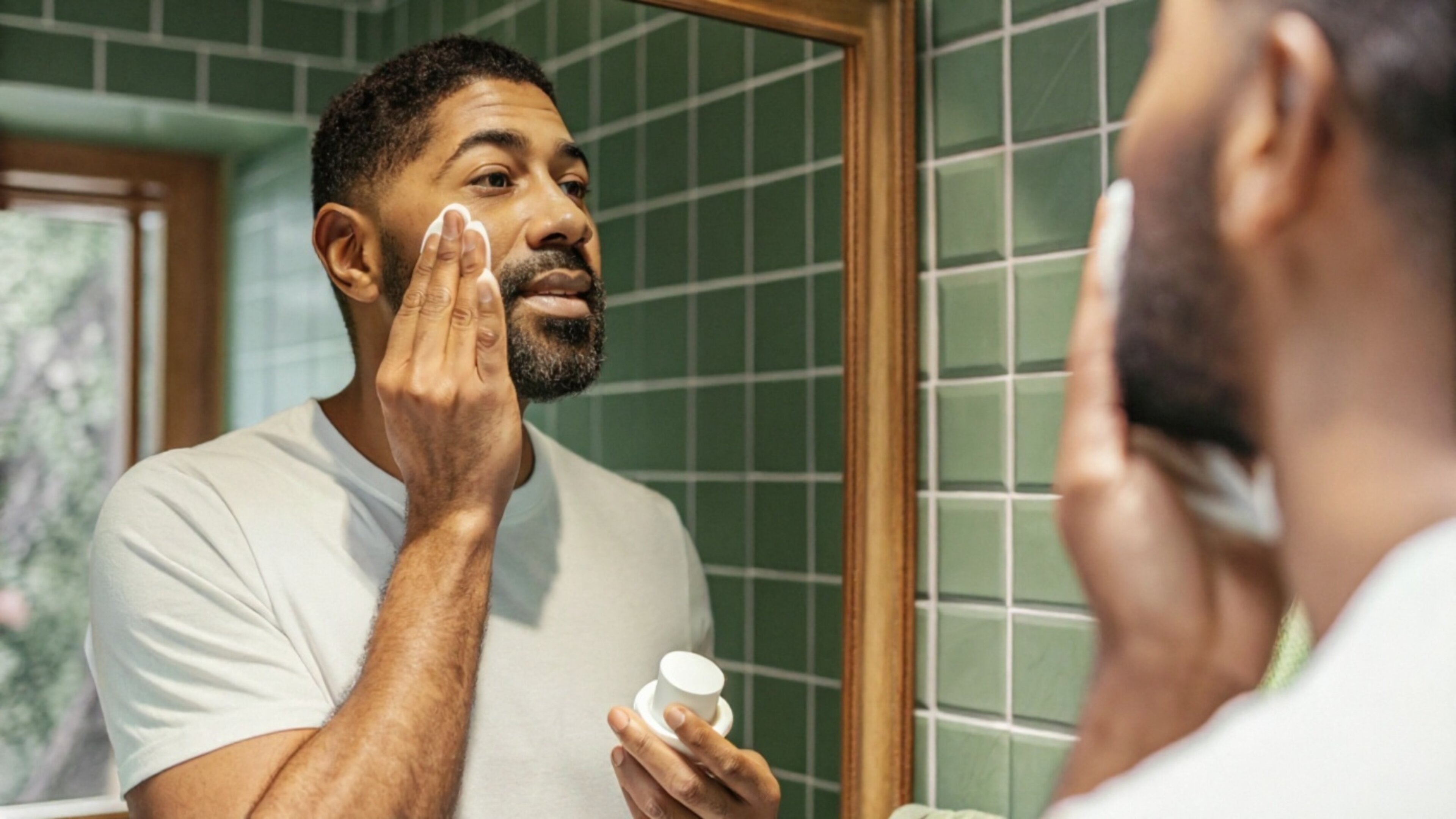

Your Summer Skin Needs Different Things. Here's What to Know.
Something shifts in summer. The air is warmer and more humid. You are spending more time outside. The sun is stronger, and so is its effect on your skin. You might notice that what worked perfectly well in February feels different in June — heavier, slower to absorb, or simply not quite right.
This is not a product problem. It is a seasonal one. And understanding what your skin is actually doing in summer makes it much easier to adjust how you care for it.
What summer does to your skin
Skin is not static. It responds to its environment constantly — and summer introduces a specific set of conditions that change how the barrier behaves.
Heat and UV exposure put extra stress on the skin barrier, making it more reactive and slower to recover (Engebretsen et al., 2016). Warmer temperatures also drive up sebum production — studies have shown roughly a 10% rise in sebum excretion for every 1°C increase in skin temperature (Williams et al., 1973). The combined effect is familiar: skin can feel dehydrated and greasy at the same time, while sweat and buildup get trapped in pores.
For families with sensitive skin, summer brings its own particular challenges. Heat can also be a trigger for eczema flares for some people. Sweat, chlorine from swimming pools, and the constant transition between outdoor heat and air-conditioned interiors can all disrupt a skin barrier that has taken months of consistent care to strengthen.
The good news is that small, considered adjustments — rather than a complete overhaul — are usually all that is needed.
What actually changes in summer
How much you use matters more than what you use.
One of the most useful summer adjustments for body skincare is simply using less product, applied more deliberately. In cooler months, low humidity, cold air, and central heating put extra pressure on the skin's barrier, which can leave it dry, tight, and slow to recover (Engebretsen et al., 2016). In summer, higher humidity supports barrier function more naturally — though the heat brings its own challenges. A smaller amount of a rich, anhydrous product, warmed well between the palms and pressed into damp skin after showering, is often all the body needs.
This is not a reason to stop moisturising. Consistent habits often matter more than expensive products — and healthy skin usually responds best to approaches that support hydration and reduce irritation. The barrier still needs support in summer, particularly on areas exposed to sun, salt, or chlorine. It simply needs it differently.
Sunscreen becomes non-negotiable.
For the face and any exposed skin, a broad-spectrum SPF 30 or higher is widely recommended as the most important addition to any summer skincare routine. Sunscreen should be reapplied every two hours, and after swimming or heavy sweating (NHS; British Association of Dermatologists). This applies to every member of the family, including children, and to every skin tone. Melanin-rich skin is not immune to UV damage — it presents differently, often as hyperpigmentation or uneven tone rather than visible burning. Skin cancer risk, while lower, is still present (British Association of Dermatologists).
After sun and swimming, the body needs extra attention.
Chlorine, salt water, and prolonged sun exposure are three of the most effective ways to strip the skin's natural oils and compromise the barrier. After a day at the pool or beach, a thorough rinse in lukewarm water followed by an immediate, generous application of a nourishing body product makes a significant difference to how the skin recovers — and how it feels the next morning.
This is one of the moments where Elysian Luxe earns its place in a summer bag. Applied to slightly damp skin after rinsing off chlorine or salt, the shea, avocado oil, and jojoba work quickly to replenish what the water removed — without the heaviness that would feel uncomfortable in warmer weather. The lavender oil has a naturally calming effect on sun-exposed skin. A little goes further than you might expect.
Hydration from the inside out.
Staying hydrated through the day is a basic habit that supports the body — and the skin alongside it. Most people don't need to dramatically increase their intake, just stay topped up. For families spending long days outdoors — at the park, the beach, the school sports day — building that into the day is as straightforward as it sounds.
A note on children's skin in summer
Children's skin barriers are still developing, which makes them more vulnerable to the stresses of summer — UV exposure, chlorine, heat-triggered sensitivity. Consistent, gentle moisturising after swimming and bathing, a high-factor mineral sunscreen applied generously and often, and products free from synthetic fragrance and harsh ingredients are the foundations of good summer skin care for younger family members.
The same Elysian Luxe that works for adults works for the children in your family through summer — adjusted only in amount. A small amount, warmed properly, goes a long way on smaller skin.
The simple summer approach
Less product, more consistently. Sunscreen every day. Extra care after swimming. More water. These are not complicated adjustments — they are the kind of small, seasonal shifts that make a real difference to how every member of the family feels in their skin through the warmer months.
Pure. Proven. Personal.
Explore Elysian Luxe Nourishing Body Butter
We believe in the power of nature, but we are not medical professionals. Always consult with a GP or dermatologist for persistent skin concerns.
References:
- Williams, M., Cunliffe, W.J., Williamson, B., et al. (1973). The effect of local temperature changes on sebum excretion rate and forehead surface lipid composition. British Journal of Dermatology, 88(3), 257–262. doi:10.1111/j.1365-2133.1973.tb07544.x.
- Engebretsen, K.A., Johansen, J.D., Kezic, S., Linneberg, A., & Thyssen, J.P. (2016). The effect of environmental humidity and temperature on skin barrier function and dermatitis. Journal of the European Academy of Dermatology and Venereology, 30(2), 223–249. doi:10.1111/jdv.13301.
- NHS. Sunscreen and sun safety. https://www.nhs.uk/live-well/seasonal-health/sunscreen-and-sun-safety/
- British Association of Dermatologists. Sun Protection Fact Sheet. skinhealthinfo.org.uk — https://www.skinhealthinfo.org.uk/sun-awareness/the-sunscreen-fact-sheet/