Why Men's Skin Deserves More Than an Afterthought
Pick up almost any men's skincare product and look at the ingredient list. Then pick up the equivalent product from the same brand marketed at women. In many cases, the formulations are nearly identical — same base, same actives, different scent and a darker bottle.
Much of what's sold as "men's skincare" is essentially the same formulation as the women's line, in a darker bottle with a sharper-edged label. The industry has largely treated men's skin as a secondary consideration — worth addressing, but not worth understanding properly.
That is a problem. Because men's skin is biologically distinct, with specific needs that generic reformulations were never designed to meet.
What makes men's skin different
The differences begin with testosterone. Men's skin is approximately 20% thicker than women's, with the literature reporting a range of 10–25%. It produces more sebum, has larger pores, a denser network of sweat glands, and a steeper decline in collagen over time. These differences mean men's skincare needs to be barrier-supportive rather than stripping (Rahrovan et al., 2018; Oblong, 2012).
In practice, this means that many products formulated for women — particularly lighter, water-based moisturisers — do not deliver enough nourishment to penetrate the denser structure of male skin effectively. Conversely, many products specifically marketed at men lean into the "deep cleansing" or "cooling" angle, which can strip the barrier and leave skin more reactive than before.
Research indicates that male skin responds differently to environmental stressors — UV exposure, heat, and stress — and these differences are biological, not just down to different product habits (Oblong, 2012).
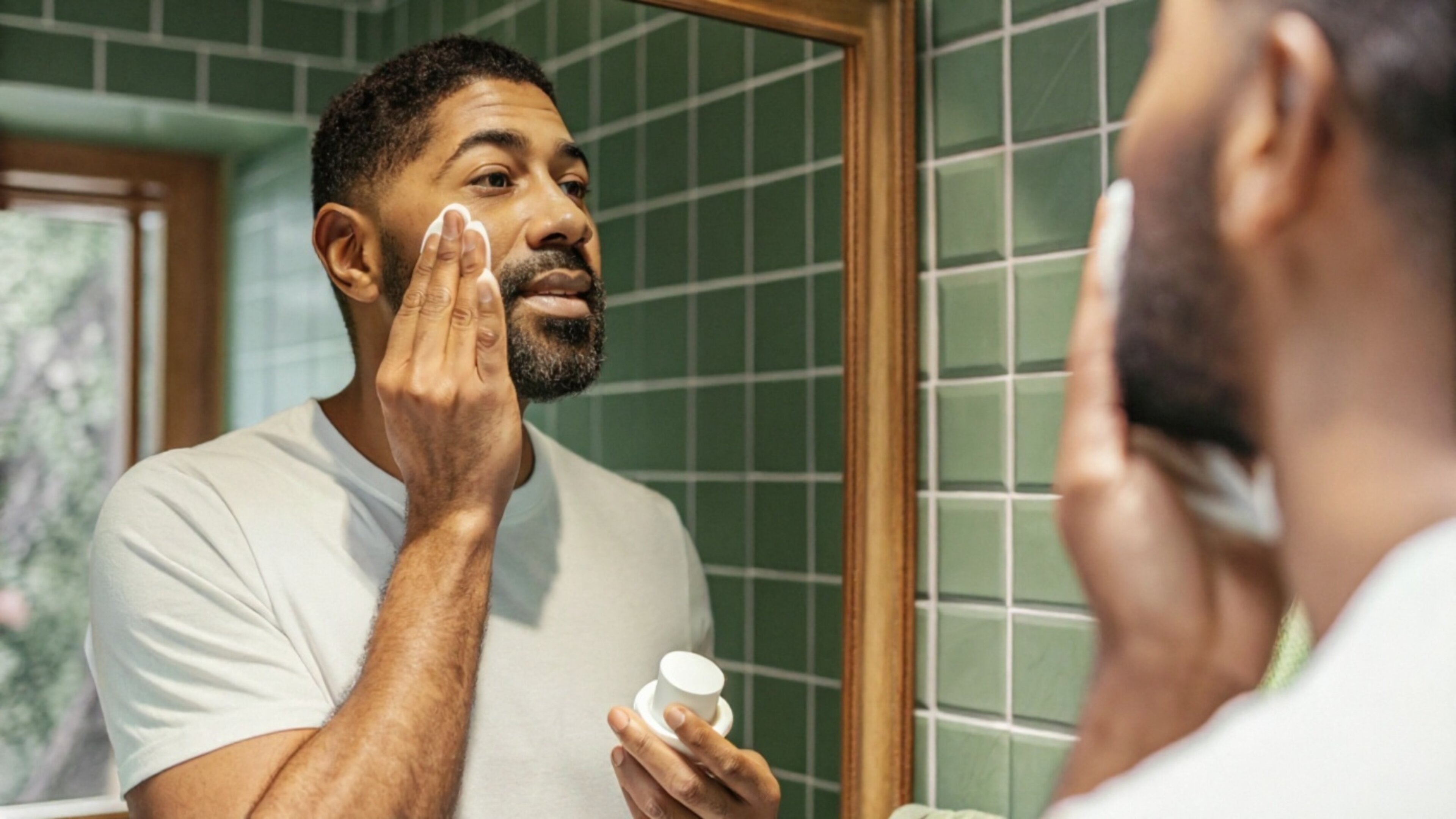
Then there is shaving. For the majority of men, the face takes a daily hit that has no equivalent in women's skincare. Beard hair is dense, stiff, and grows at low angles to the skin — so shaving requires pressure and repeated strokes that create micro-abrasions and raise the likelihood of irritation (Maurer, 2016). The inflammation this causes is cumulative, and products laden with synthetic fragrance — standard in most men's grooming ranges — make it worse rather than better.
The cultural piece that the industry ignores
Here is something worth saying plainly: across much of West Africa, skincare has never been gendered. Shea butter — used for generations as a daily skin staple — was applied to men, women, children, and elders alike. Not as a luxury, not as a beauty product, but as purposeful, functional care. A way of maintaining healthy skin in climates that demanded it.
The idea that skincare is primarily or exclusively a feminine concern is a relatively recent Western construction — and a commercially convenient one. It has left generations of men without the foundation of simple, consistent skin care that their biology clearly benefits from.
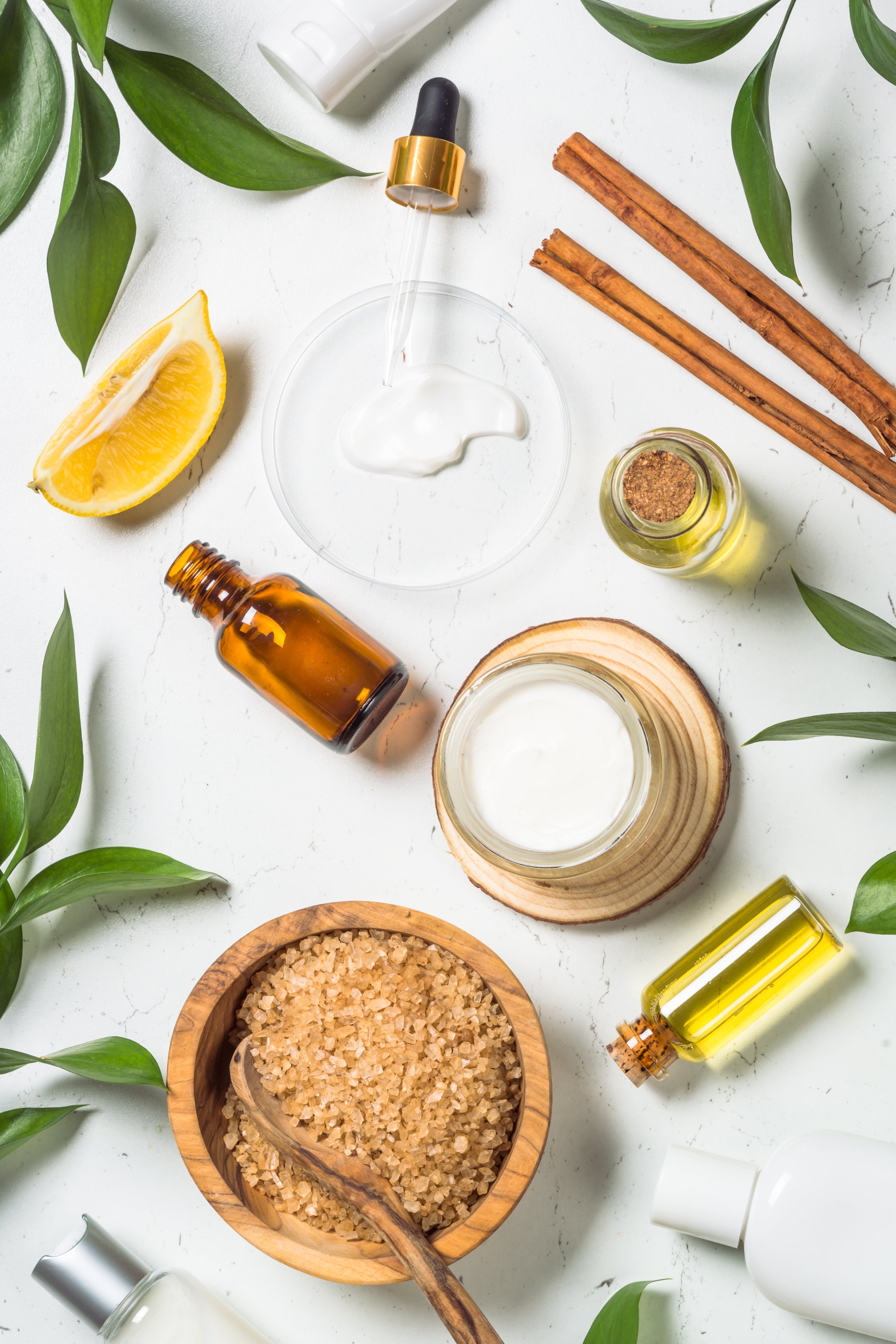
Lunask was built on a different premise. Elysian Luxe was developed for every member of the family — and that has always included the men in it. The shea, avocado oil, jojoba, coconut oil, and mango butter in the formula do not behave differently on male skin. They nourish the barrier, penetrate deeply, and support the skin's structure in ways that are biologically relevant regardless of gender. The absence of synthetic fragrance, parabens, and silicones makes it particularly appropriate for skin that takes a daily hit from shaving and environmental exposure.
What men's skin actually needs day to day
The good news is that it does not have to be complicated. The gap between what is available and what men actually use is not a knowledge problem. It is a trust problem. Most men will not follow a ten-step programme — and they should not have to. What works is something simple, effective, and easy to reach for every day.
A few principles worth knowing:
Moisturise after every shower, not just when skin feels dry. The barrier that prevents moisture loss needs consistent support. Applying a rich, occlusive product to slightly damp skin after bathing — within that three-minute window we have written about before — is the single most effective daily habit for male skin health.
Avoid synthetic fragrance. It is the most common trigger for post-shave irritation and one of the most prevalent ingredients in men's grooming products. If a product has "fragrance" or "parfum" on the INCI list without further specification, that is worth noting.
Simpler is usually better. A short ingredient list of recognisable, purposeful plant-based ingredients will outperform a complex formulation full of filler ingredients in almost every case. Male skin does not need more products. It needs the right ones.
Consistency matters more than intensity. Daily, simple care over time produces far better results than periodic use of heavily marketed "intensive" products.
Men's skin deserves to be taken seriously. Not as a marketing category — as a real biological need that has been underserved for too long.
Pure. Proven. Personal.
Explore Elysian Luxe Nourishing Body Butter
We believe in the power of nature, but we are not medical professionals. Always consult with a GP or dermatologist for persistent skin concerns.
References:
- Rahrovan, S., Fanian, F., Mehryan, P., Humbert, P., & Firooz, A. (2018). Male versus female skin: What dermatologists and cosmeticians should know. International Journal of Women's Dermatology, 4(3), 122–130. doi:10.1016/j.ijwd.2018.03.002.
- Oblong, J.E. (2012). Male skin care: shaving and moisturization needs. Dermatologic Therapy, 25(3), 238–243. doi:10.1111/j.1529-8019.2012.01502.x.
- Maurer, M. (2016). The male beard hair and facial skin – challenges for shaving. International Journal of Cosmetic Science, 38(S1), 3–9. doi:10.1111/ics.12328.